Non-governmental organizations (NGOs) operate in increasingly complex environments marked by economic shifts, climate emergencies, and evolving donor expectations. While rapid emergency response and direct aid distribution remain vital, long-term impact is impossible without strong operational foundations. When charitable institutions focus exclusively on immediate field projects while neglecting internal structures, operational friction, high staff turnover, and strategic misalignment inevitably follow. Moreover, without dedicated organizational planning, humanitarian teams struggle to scale programs effectively or maintain complete financial transparency. Investing in NGO organizational development resolves these internal bottlenecks, transforming teams into highly efficient, future-ready institutions.
Furthermore, building robust administrative governance transforms how non-profits deliver aid on the ground. By refining human resource readiness, streamlining workforce allocation, and aligning daily operations with strategic goals, charitable organizations maximize the real-world value of every donor contribution.
What is NGO Organizational Development?
NGO organizational development is the systematic process of strengthening a non-profit’s internal capabilities, administrative structures, human resources, and strategic frameworks. Rather than focusing solely on external aid delivery, it optimizes workforce planning, financial governance, leadership training, and digital monitoring to ensure long-term program sustainability, operational transparency, and maximum field impact.
The Core Pillars of Effective NGO Organizational Development
Sustained humanitarian impact relies on internal operational health just as much as external field delivery. A comprehensive institutional growth model addresses strategic alignment, human capital management, financial oversight, and technological adoption simultaneously. When an organization optimizes its administrative architecture, field workers execute projects with greater speed, safety, and accountability.
Furthermore, strong organizational governance fosters a culture of continuous learning and adaptive leadership. Training staff members, clarifying operational workflows, and establishing clear performance metrics ensures that emergency relief and development campaigns run smoothly. Investing internally protects non-profits from operational burnout and guarantees that community aid remains reliable during severe crises.
Strategic Plan Implementation Readiness
Creating a multi-year strategic vision is only effective when supported by concrete implementation tools. Aligning daily department workflows with core organizational goals ensures that long-term commitments translate into measurable community outcomes.
Human Resource and Workforce Planning
Equipping non-profits with clear job frameworks, skill matrices, and competitive HR policies attracts top-tier talent. Robust workforce planning ensures the right specialists are deployed to high-need zones without operational delay.
Continuous Organizational Learning
Regular internal audits, policy reviews, and capacity-building workshops cultivate an environment of professional excellence. Continuous education keeps field staff updated on international humanitarian standards and ethical safeguarding protocols.
Strengthening Internal Systems for Maximum Donor Transparency
Demonstrating complete financial integrity and operational accountability is essential for maintaining long-term donor confidence. Today’s donors, corporate partners, and institutional grantors demand rigorous tracking of how funds are managed, allocated, and audited. Implementing standardized organizational controls protects charitable assets and ensures maximum resource delivery to primary beneficiaries.
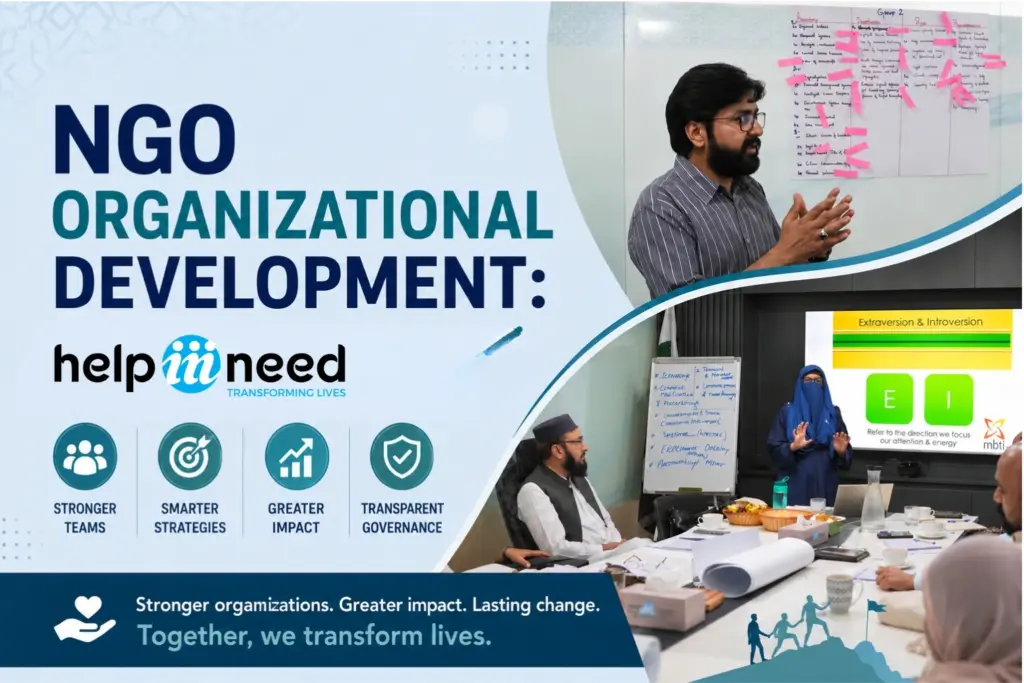
Help in Need recently hosted an intensive executive session at its Head Office focused on “Strategic Plan Implementation Readiness Support” and “Organizational Structuring, Workforce Planning, and Human Resource Readiness Support.” By systematically refining administrative frameworks, the leadership team reinforced HIN’s commitment to building a transparent, highly coordinated, and future-ready humanitarian institution.
Institutional Accreditation and Compliance
Securing formal certifications from bodies like the Pakistan Centre for Philanthropy (PCP) and tax-exempt approvals from regulatory authorities validates internal governance. Strict compliance proves that an organization operates with peak fiscal integrity.
Clear Procurement and Resource Tracking
Standardizing procurement procedures prevents waste, eliminates fraud, and secures optimal pricing for emergency supplies. Transparent supply chain management guarantees that donor funds yield maximum tangible goods for beneficiaries.
Aligning Human Capital with Humanitarian Priorities
An organization’s greatest asset is its human capital—the dedicated coordinators, logistics officers, and field workers serving on the front lines. Without structured workforce planning, humanitarian workers face extreme pressure, vague responsibilities, and operational fatigue during major disaster responses. Designing clear organizational charts and career growth pathways creates a resilient workforce capable of handling complex challenges. Some of the key operational benefits of prioritizing human resource readiness in non-profits are:
- Accelerated Emergency Response: Pre-defined roles and clear command hierarchies eliminate confusion during disaster relief drives.
- Reduced Employee Turnover: Clear career development pathways and fair HR policies retain experienced field staff.
- Enhanced Cross-Department Synergy: Seamless communication between finance, logistics, and program delivery units prevents delays.
- Strict Adherence to Safeguarding: Comprehensive HR training enforces child protection, gender safety, and ethical beneficiary care across all projects.
Structured Leadership and Executive Support
Providing senior management with strategic planning frameworks ensures sound decision-making during unpredictable crises. Strong executive guidance keeps field programs aligned with the core mission of human dignity.
Empowering Local Field Workers
Recruiting and training staff directly from beneficiary communities enhances local cultural understanding and community trust. Localized hiring creates sustainable employment while improving ground-level project execution.
Moving Beyond Short-Term Aid Toward Sustainable Capacity Building
Modern non-profit management has evolved past simple emergency relief distribution toward long-term institutional resilience. While short-term aid saves lives during sudden floods or harsh winters, strong organizational governance ensures that relief transitions smoothly into permanent economic recovery.
By modernizing internal monitoring systems and digital reporting tools, charities evaluate project performance in real time. Continuous assessment allows program directors to refine strategy, adjust budget allocations, and deliver long-term solutions like solar water systems, vocational trade kits, and school rehabilitation.
Here are two actionable tips to optimize institutional capacity:
Conduct Bi-Annual HR and Workforce Audits
Review organizational charts and skill requirements every six months to identify staffing gaps, ensure proper resource allocation, and update job descriptions before major campaign launches.
Implement Real-Time Digital Project Tracking
Adopt centralized cloud management tools for field logistics and financial reporting to provide donors with transparent, data-backed impact updates.
Digital Transformation and Management Systems
Integrating modern software platforms streamlines donor management, inventory tracking, and project monitoring. Digital tools minimize paperwork and free field teams to focus on community engagement.
Building Strategic External Partnerships
Collaborating with academic institutions, technical training centers, and international relief forums expands an organization’s knowledge base. Strategic alliances bring innovative methodologies to local community projects.
FAQs
What is NGO organizational development and why is it important?
NGO organizational development focuses on refining internal management, HR planning, and strategic governance to build resilient non-profits capable of delivering maximum, long-term community impact.
How does workforce planning improve humanitarian aid delivery?
Workforce planning clarifies staff roles, enhances emergency readiness, and ensures that qualified personnel are deployed quickly to disaster zones without operational friction.
Why should donors support organizations that invest in internal capacity?
Investing in internal capacity guarantees operational transparency, low administrative waste, strict financial auditing, and sustainable program delivery for vulnerable communities.