
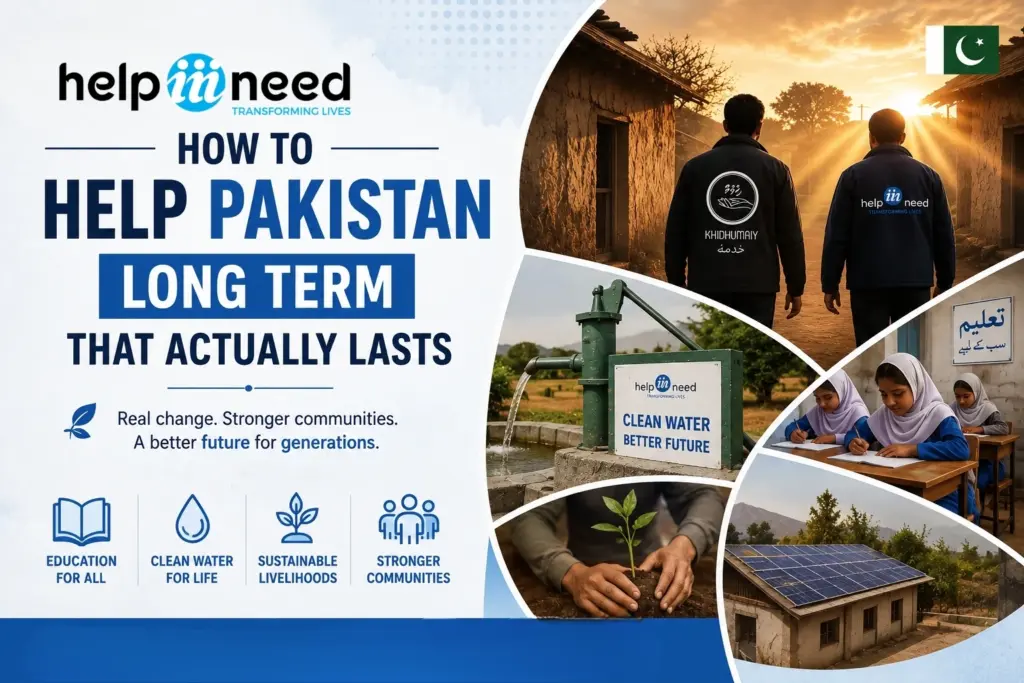
What if one gift you make today kept giving for years after you had forgotten you made it? That question sits at the heart of how to help Pakistan long term and it is one more British Muslims are asking as headlines fade but hardship stays. The Prophet Muhammad ﷺ said that when a person dies, their good deeds stop except for three: ongoing charity, beneficial knowledge, and a righteous child who prays for them (Sahih Muslim 1631). Emergency appeals save lives, yet they only treat the symptom. Real change asks something deeper of us: patience, planning, and the courage to fund the roots rather than the leaves. If you have ever given after a flood and quietly wondered whether it changed anything at all, this guide was written for you.
What Does Lasting Help Really Mean?
The whole idea rests on one simple but powerful shift in thinking: moving from rescue to resilience. Short-term aid; food parcels, blankets, emergency medical care, saves lives during a crisis, and it will always be needed. Lasting help goes one step further, building the skills, systems, and infrastructure that stop the next disaster from hitting as hard.
Picture the difference between handing someone a fish and helping them own the pond. A one-off donation might feed a family for a week. A clean water well, a small business grant, or a sponsored child’s education can lift that same family for a generation.
Islam gives real weight to this kind of enduring good. Sadaqah Jariyah, continuous charity rewards the giver every single time their gift keeps benefiting others, long after the money leaves their hand. A well that quenches thirst for decades is charity that simply never sleeps.
How to Help Pakistan Long Term: Fund the Three Foundations
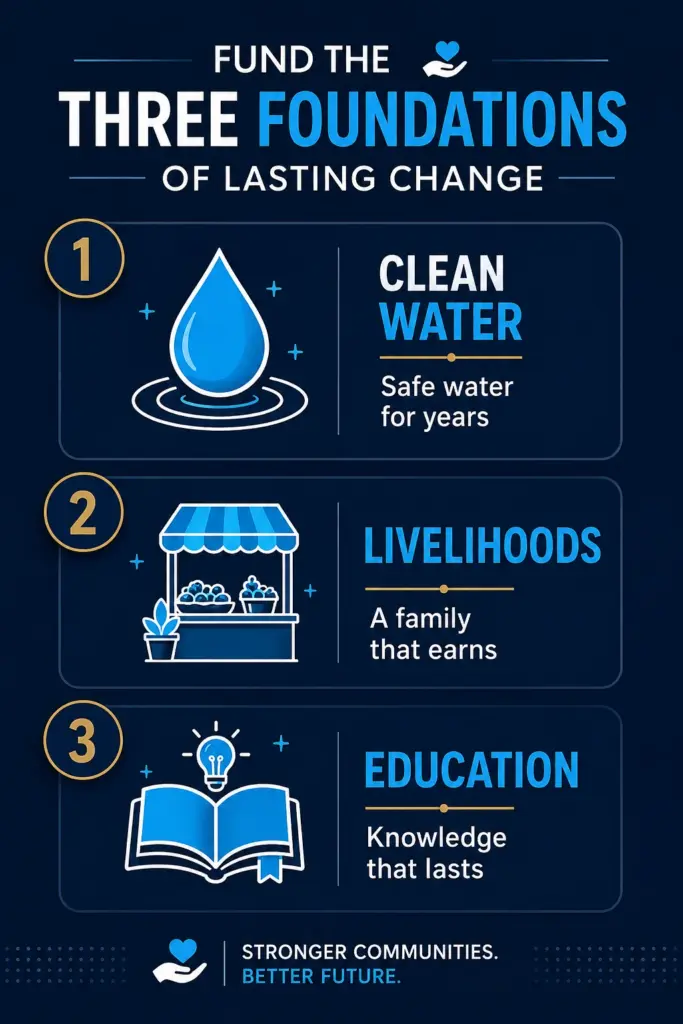
If you want the most practical answer, start with the three pillars that break the cycle of poverty for good. These are the areas where sustainable development projects in Pakistan deliver the deepest, most measurable change.
- Clean water. Waterborne illness keeps children out of school and adults out of work. Clean water projects in Pakistan. Solar-powered wells and hand pumps, give whole villages safe water for years, freeing families from long daily walks and constant sickness.
- Livelihoods. A grocery stall, a sewing machine, a set of honey-bee kits ; small, well-chosen tools turn a struggling household into a self-sufficient one. Sustainable livelihood programmes across Pakistan help people earn with dignity instead of depending on the next handout.
- Education. Sponsoring a child’s schooling or a Hifz student plants beneficial knowledge that pays forward for a lifetime, and often into the next generation too.
Each pillar reinforces the others. A child with clean water stays healthy enough to attend school; an educated parent earns enough to keep the taps running. When you fund the foundations, you are not paying for one good day, you are paying for a better decade. You can see this approach across Help in Need’s ongoing programmes.
Give Regularly, Not Just in a Crisis
Most people give when the news is loud. The most effective donors give when it is quiet. Setting up a small monthly gift is one of the smartest answers to how to help Pakistan long term, because charities can plan, hire, and build with income they can actually count on.
Consider these steady habits:
- Set up a monthly donation. Even a modest recurring amount funds ongoing charity projects in Pakistan far more reliably than a single large gift.
- Give your Zakat where it multiplies. Directing your obligatory charity toward development, not just relief, means it works for years rather than days.
- Automate your Sadaqah. A standing order removes the friction — your good deed happens whether or not you remember to log in.
Steady giving also protects communities between emergencies, when the cameras have moved on but rebuilding has barely begun. That quiet, consistent support is often what turns short-term survival into genuine recovery.
How Help in Need Turns Your Giving Into Lasting Change
Help in Need works on the ground across Pakistan, focusing on exactly the foundations that create lasting change — clean water, livelihood support, and education. Every project is designed to keep serving a community long after it is built, not just for the length of an appeal.
There is one more thing worth knowing. Help in Need runs a strict 100% donation policy, which means every penny you give reaches the people it was meant for — running costs are covered separately, so your gift is never diluted. When you are deciding how to help Pakistan long term, that promise matters: your generosity arrives whole. Explore the current projects and give here.
FAQs
What is the best way to help Pakistan long term?
The most effective approach is funding development rather than one-off relief. Clean water wells, small-business grants, and education give families the tools to lift themselves out of poverty for good, so your support creates change that lasts for years instead of days.
Is it better to give a lump sum or donate monthly?
Monthly giving usually helps more. Regular donations let charities plan ahead, employ local staff, and finish long-term projects with confidence. A steady standing order also keeps communities supported between emergencies, when funding often dries up but the need quietly remains.
Can I give my Zakat to development projects in Pakistan?
Yes, as long as the recipients qualify under Zakat rules. If you are exploring how to help Pakistan long term, directing Zakat toward development lets it fund lasting change rather than short-term relief. Always check that your chosen project is Zakat-eligible before you give.
How do I know my donation actually reaches Pakistan?
Choose charities that publish their work and operate a clear donation policy. Organisations with a 100% donation policy, like Help in Need, make sure your full gift reaches beneficiaries, with administrative costs funded separately so nothing is taken from your contribution.
What counts as Sadaqah Jariyah for Pakistan?
Sadaqah Jariyah is ongoing charity that keeps rewarding you as it benefits others. Water wells, education sponsorships, fruit trees, and income-generating projects all qualify, because each one carries on helping people long after your original donation is made.
A Gift That Outlives the Headlines
Real change in Pakistan is never built in a day, and neither is your reward for it. Every well, every classroom, and every small business you fund keeps giving long after you have moved on. If you have been asking how to help Pakistan long term, choose the charity that outlives the headlines. Donate today at helpinneed.org and let your good deed never end — with Help in Need, 100% of your gift reaches those who need it most.