
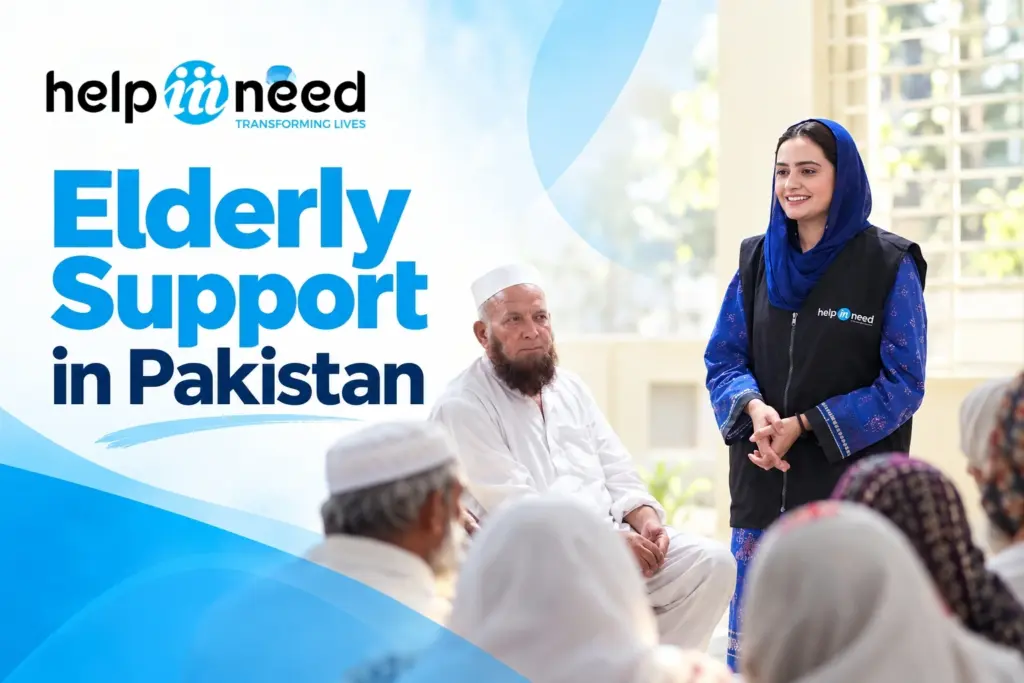
Allah says in the Quran: “Your Lord has commanded that you worship none but Him, and that you be kind to your parents. If one or both of them reach old age in your care, do not say to them even a word of irritation” (Surah Al-Isra, 17:23). Elderly support in Pakistan has always begun at home, with families caring for the people who once cared for them.
Yet that safety net is under real strain. Rising prices, smaller households and harsher summers are leaving many older people to cope alone. Some live by themselves after their children move to the cities or overseas. Others still work in fields and brick kilns well into their seventies.
If you have ever worried about an ageing parent, grandparent or neighbour, this guide is for you. It explains what older people in Pakistan face today, what Islam asks of us, and how you can help make sure no elder goes unheard.
What Does Elderly Support Mean in Islam?
Elderly support means meeting the needs of older people so they can live with dignity, good health and a voice in their community. It covers practical help, such as food, medicine and safe shelter. It also covers respect: listening to elders, asking for their advice and including them in decisions.
Islam places this duty close to the heart of faith. Two simple terms help explain it:
- Birr al-walidayn: goodness and kindness towards parents, especially as they grow older.
- Ikram al-kabir: honouring the elderly, whether they are family, neighbours or strangers.
The Prophet Muhammad (peace be upon him) said: “He is not one of us who does not show mercy to our young and respect to our elders” (Sunan al-Tirmidhi, 1919). He also taught that honouring an elderly Muslim is part of glorifying Allah (Sunan Abu Dawud, 4843).
In other words, caring for older people is not a favour we do for them. It is an act of worship, and it is a debt we gladly repay to the generation that raised us.
The Challenges Older People Face in Pakistan Today
Pakistan is a young country, but its older population is growing every year. Many of these elders face problems that stay hidden behind closed doors:
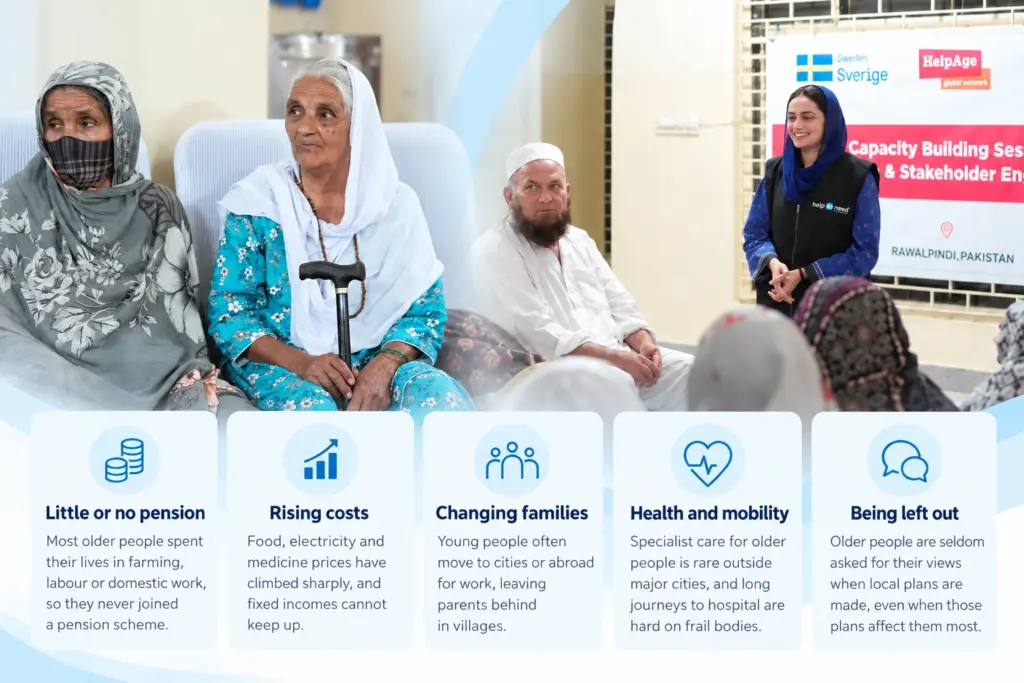
These problems feed into one another. A widow with no pension may skip her blood pressure tablets to pay the electricity bill. A grandfather with poor eyesight may miss a flood warning sent by text message. Real support has to address all of these needs together, not one at a time.
Elderly Support in Pakistan and the Climate Crisis
Pakistan is one of the countries most exposed to climate change, and older people often feel its effects first. The 2022 floods affected more than 33 million people, while heatwaves now push summer temperatures past 45°C in parts of Punjab and Sindh.
Older bodies struggle to cope with extreme heat. Chronic illnesses such as diabetes and heart disease raise the risk of heatstroke. When floods arrive, elders with limited mobility find it harder to evacuate, and they may lose medicines, documents and savings in a single night.
Even so, older people are not only victims of a changing climate. They remember how rivers behaved decades ago, which crops survived drought and where safe water could be found. That knowledge is valuable. Climate resilience means preparing communities to withstand shocks, and it works best when older people help shape the plan rather than wait for rescue.
How Can You Support Older People Around You?
You do not need to run a charity to make a difference. Small, steady actions add up:
- Check in regularly. A phone call or visit eases loneliness and helps you spot health problems early.
- Give your Zakat or Sadaqah wisely. Older people living in poverty are among those eligible for Zakat. Choosing a programme focused on elderly support in Pakistan means your giving reaches people who are often overlooked.
- Share your time. Volunteer at a community session, help with paperwork, or drive an elder to a clinic.
- Ask for their opinion. Invite older relatives into family and community decisions. Being heard restores dignity.
- Back advocacy work. Support projects that help older people raise concerns with local officials and service providers.
If you would like to put your charity behind this cause, you can support Help in Need’s older persons programme.
How Help in Need Can Help
Help in Need (HIN) is a non-political, not-for-profit social organisation registered with the Securities & Exchange Commission of Pakistan (SECP) under Section 42 of the Companies Ordinance 1984 (registration no. 0065549). Our work puts people at the centre, including the elders so often pushed to the margins.
Through our project, Amplifying Older People’s Voices on Ageing and Climate Resilience through Advocacy and Dialogue in Punjab, we held community awareness sessions with 120 older people in Rawalpindi and Bahawalpur. Participants named the challenges in their lives, worked through practical solutions and grew in confidence to raise their concerns with local stakeholders.
This is what elderly support in Pakistan should look like: not charity done to people, but change shaped with them. Your donation helps us reach more communities and keep these conversations going. Donate to our older persons programme.
FAQs
What support is available for elderly people in Pakistan?
Support comes from families, charities and the state. Some provinces and the Islamabad Capital Territory have passed senior citizens’ laws that promise benefits such as free healthcare and travel concessions. Charities like Help in Need add community programmes, advocacy and direct aid, especially for older people living in poverty or rural areas.
Can I give Zakat to elderly people?
Yes, if they meet the conditions for Zakat, such as being poor or in need. However, you cannot give your Zakat to your own parents or grandparents, because supporting them is already your duty. You can give it to eligible older people outside your direct family line.
Why are older people more at risk from climate change?
Elderly support in Pakistan must account for climate risk, because many older people live with chronic illnesses that make heat dangerous. Limited mobility makes evacuating during floods harder. Some also lack phones or reading skills to receive early warnings. Including elders in local disaster planning reduces these risks and saves lives.
When is International Day of Older Persons?
The United Nations marks International Day of Older Persons on 1 October every year. It was established by a UN General Assembly resolution in 1990. The day highlights what older people contribute and calls for societies that respect their rights, health and voices.
How can I donate to help older people in Pakistan?
You can donate online through Help in Need’s website and choose our older persons programme. Your gift funds awareness sessions, advocacy and practical help for elders in Punjab and beyond. Give Zakat, Sadaqah or a regular monthly donation, whichever suits your circumstances best.
Stand With Pakistan’s Elders
Our elders carried us when we could not walk. Now it is our turn to carry them. Every gift you give helps an older person stay healthy, feel safe and speak up for their community. Help in Need is ready to turn your kindness into lasting change for elderly support in Pakistan. Donate today at helpinneed.org and let your good deed never end.